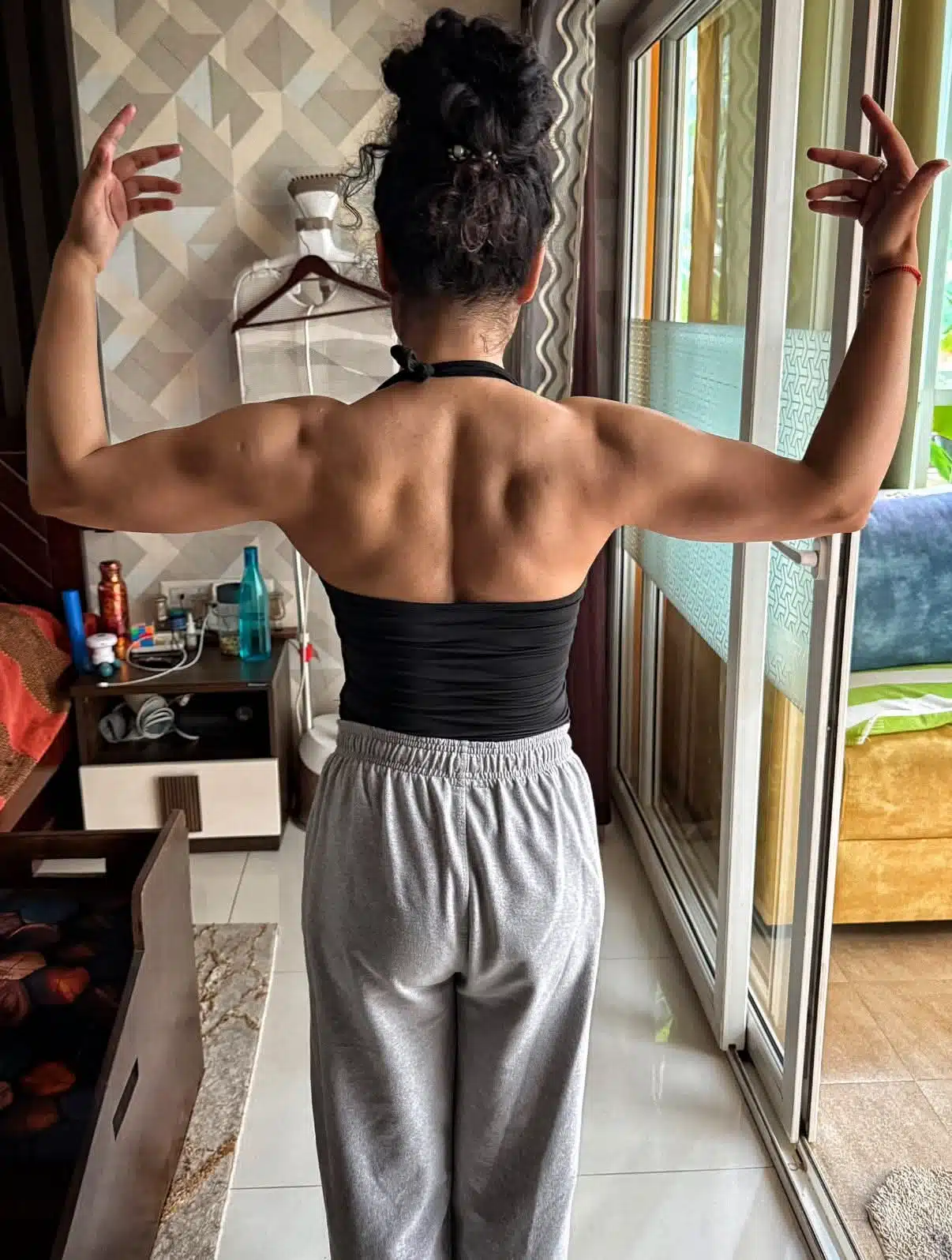






Building Muscle Starts Long Before the First Rep—and Continues Long After the Last
Why Training Alone Isn’t Enough for Lasting Muscle Growth
By Alka Rao Yadav
#fittrcoach
Walk into any gym, and you’ll find people pushing themselves through intense workouts, convinced that every extra repetition and every heavier weight will automatically translate into bigger, stronger muscles.
Yet many leave frustrated.
They train consistently, rarely miss a session, and still struggle to see meaningful progress.
The reason is surprisingly simple: muscle isn’t built during your workout.
Your workout is merely the stimulus. The actual construction of muscle takes place afterwards—when your body has the resources, recovery, and biological environment needed to rebuild stronger than before.
Understanding this shift in perspective can completely transform the way you approach fitness.
The Gym Provides the Signal—Your Body Does the Rest
Resistance training creates microscopic damage within muscle fibres. While the word “damage” may sound negative, it is actually the starting point of adaptation.
Every challenging workout sends a clear message to your body:
“These muscles need to become stronger to handle future demands.”
But sending the message isn’t enough.
Your body still has to perform the construction work.
Without adequate nutrition and recovery, that signal remains unanswered.
Think of training as placing an order for a new building. The blueprint may be ready, but without bricks, workers, and time, nothing gets built.
The same principle applies to muscle growth.
Protein: The Foundation of Every Muscle Cell
Muscle tissue is built from amino acids, which come from dietary protein.
When protein intake is insufficient, your body simply doesn’t have enough raw materials to efficiently repair and grow muscle after training.
This doesn’t mean eating excessive amounts of protein will magically create muscle.
Instead, the goal is to consume enough high-quality protein consistently throughout the day to support muscle protein synthesis—the natural process of repairing and building muscle tissue.
Excellent protein sources include:
- Lean meats
- Fish
- Eggs
- Dairy products
- Soy products
- Lentils and beans
- Whey protein when needed
For people pursuing muscle gain, consistency matters far more than occasional high-protein meals.
Hormones Create the Right Environment
Hormones often receive too much credit—or too much blame—when discussing muscle growth.
The reality is more balanced.
Hormones don’t directly build muscle on their own.
Instead, they create the biological environment that allows muscle repair and growth to occur efficiently.
Hormones such as testosterone, growth hormone, insulin, and insulin-like growth factor (IGF-1) all play supportive roles in muscle development.
Fortunately, healthy hormonal signalling is influenced by everyday lifestyle habits:
Quality nutrition
Balanced meals provide the energy and nutrients needed for normal hormone function.
Resistance training
Regular strength training naturally supports healthy anabolic signalling.
Adequate sleep
Many important recovery hormones are released during deep sleep.
Stress management
Chronically elevated stress hormones can interfere with recovery and muscle-building processes.
Rather than chasing hormonal shortcuts, focusing on healthy daily habits provides a far more sustainable foundation.
Recovery Is Where Progress Actually Happens
Many people believe more training equals more progress.
In reality, more training without sufficient recovery often produces the opposite effect.
Recovery allows muscles to repair microscopic damage, replenish energy stores, reduce inflammation, and prepare for the next training session.
Sleep is particularly important.
During deep sleep, your body performs many of its most important repair processes, supporting both physical recovery and overall performance.
Skipping sleep while expecting muscle growth is similar to expecting a construction crew to work without electricity.
Eventually, progress stalls.
When Hard Work Doesn’t Produce Results
If you’ve been training consistently but still struggle to build muscle, it may be worth looking beyond your workout routine.
Ask yourself:
- Am I consuming enough protein each day?
- Am I eating enough total calories to support muscle growth?
- Am I sleeping seven to nine hours regularly?
- Am I allowing adequate recovery between training sessions?
- Is chronic stress affecting my recovery?
- Could an underlying medical condition or nutritional deficiency be limiting my progress?
Sometimes the solution isn’t another exercise.
It’s improving everything that happens outside the gym.
The Bigger Picture
Muscle gain is not created by lifting heavier weights alone.
It is the result of a complete system working together.
Training provides the stimulus.
Protein supplies the building blocks.
Healthy hormonal function supports adaptation.
Recovery allows repair and growth.
When these pillars work in harmony, your body responds remarkably well.
Instead of asking only, “How hard am I training?”
Start asking,
“Am I giving my body everything it needs to grow stronger?”
Because lasting muscle isn’t built by workouts alone.
It’s built by what happens before, during, and long after every training session.
Strength is earned in the gym—but it is built through nutrition, recovery, and consistency.