




THE QUIET VICTORY
Rachna Chakraborty on fatigue, discipline and the decision to show up
By Jaano & Seekho | Fitness & Wellbeing
“There’s a fine line between ‘I am tired and need to push through’ and ‘My body genuinely needs rest.’ Knowing that difference—and knowing yourself well enough to listen—is just as important as discipline.”
— Rachna Chakraborty
There are workouts that change the body.
And then there are workouts that quietly change the way we see ourselves.
For Rachna Chakraborty, this was one of those days.
She generally doesn’t put workout photographs in her posts. The gym, after all, can easily become a stage for performance—numbers, physiques, achievements and carefully curated moments. But on this particular day, she made an exception.
Not because the workout was spectacular.
Because showing up was.
Almost Didn’t Happen
“Almost died today…”
Rachna admits that the statement may be a little dramatic. But the feeling behind it was very real.
She was sore. Heavy. Exhausted.
The kind of exhaustion that makes staying home feel completely reasonable.
There was no shortage of reasons to skip the session. Her body was asking questions, and for a moment, rest seemed like the obvious answer.
Yet somewhere between fatigue and commitment lies a difficult question familiar to anyone who has trained consistently:
Should I push through—or should I stop?
The answer isn’t always obvious.
And, importantly, discipline doesn’t always mean forcing yourself to continue.
The Intelligence Behind Discipline
Fitness culture often celebrates the ability to push harder.
One more repetition.
One more kilometre.
One more set.
One more day when you don’t feel like training.
But experienced training teaches another lesson: knowing when not to push can be just as important as pushing.
Rachna has learned this distinction over the years.
“There’s a fine line between—I am tired and need to push through—and my body genuinely needs rest.”
That distinction requires something that cannot be measured by a smartwatch or a fitness tracker:
self-awareness.
Knowing your own body.
Recognising ordinary resistance versus genuine exhaustion.
Understanding the difference between discomfort that accompanies growth and fatigue that demands recovery.
For Rachna, that awareness has become part of her definition of discipline.
She Showed Up
On this day, she chose to go.
Not necessarily to chase a personal record.
Not to prove anything to anyone.
Simply to see what she could do.
The result?
A decent run.
A workout.
Nothing dramatic.
And yet, afterwards, something felt different.
There was a quiet satisfaction in knowing that tiredness had not made the decision for her.
“That feeling afterwards, that pride that I didn’t let tired and sore decide for me is priceless.”
That sentence captures something often missing from conversations about fitness.
The greatest reward of exercise isn’t always physical.
Sometimes it is the knowledge that you kept a promise to yourself.
Beyond Motivation
Motivation is unreliable.
Some mornings it arrives effortlessly. On others, it disappears completely.
Consistency, therefore, cannot depend entirely on motivation.
But consistency also shouldn’t mean blindly following a programme regardless of what the body is saying.
The more nuanced approach is somewhere between the two:
Show up when you can.
Recover when you need to.
Learn to tell the difference.
That is not weakness.
It is maturity.
Every Workout Is a Conversation
Perhaps the most revealing part of Rachna’s reflection comes at the end.
“Each day is a rediscovery of myself and my limits.”
That idea transforms exercise from a simple physical activity into an ongoing conversation with oneself.
Every session provides information.
How did the body respond?
How was the energy?
Was the intensity appropriate?
Was today’s limitation temporary—or a signal to recover?
Sometimes we discover that we can do more than we thought.
Sometimes we discover that we need less.
Both are valuable discoveries.
And Tomorrow Will Tell
Rachna also leaves room for uncertainty.
Maybe she judged the day correctly.
Maybe she was a little too ambitious.
She doesn’t pretend to know immediately.
“Whether I got it right today or was too ambitious, I’ll find out tomorrow.”
There is wisdom in that uncertainty.
Fitness isn’t a single perfect decision repeated every day. It is a long process of observation, adjustment and adaptation.
The body gives feedback.
The mind interprets it.
Experience teaches us to listen.
And sometimes, the biggest victory isn’t lifting more weight, running faster or finishing a harder workout.
Sometimes it is simply walking through the gym doors on a day when you almost didn’t.
The Quiet Kind of Strong
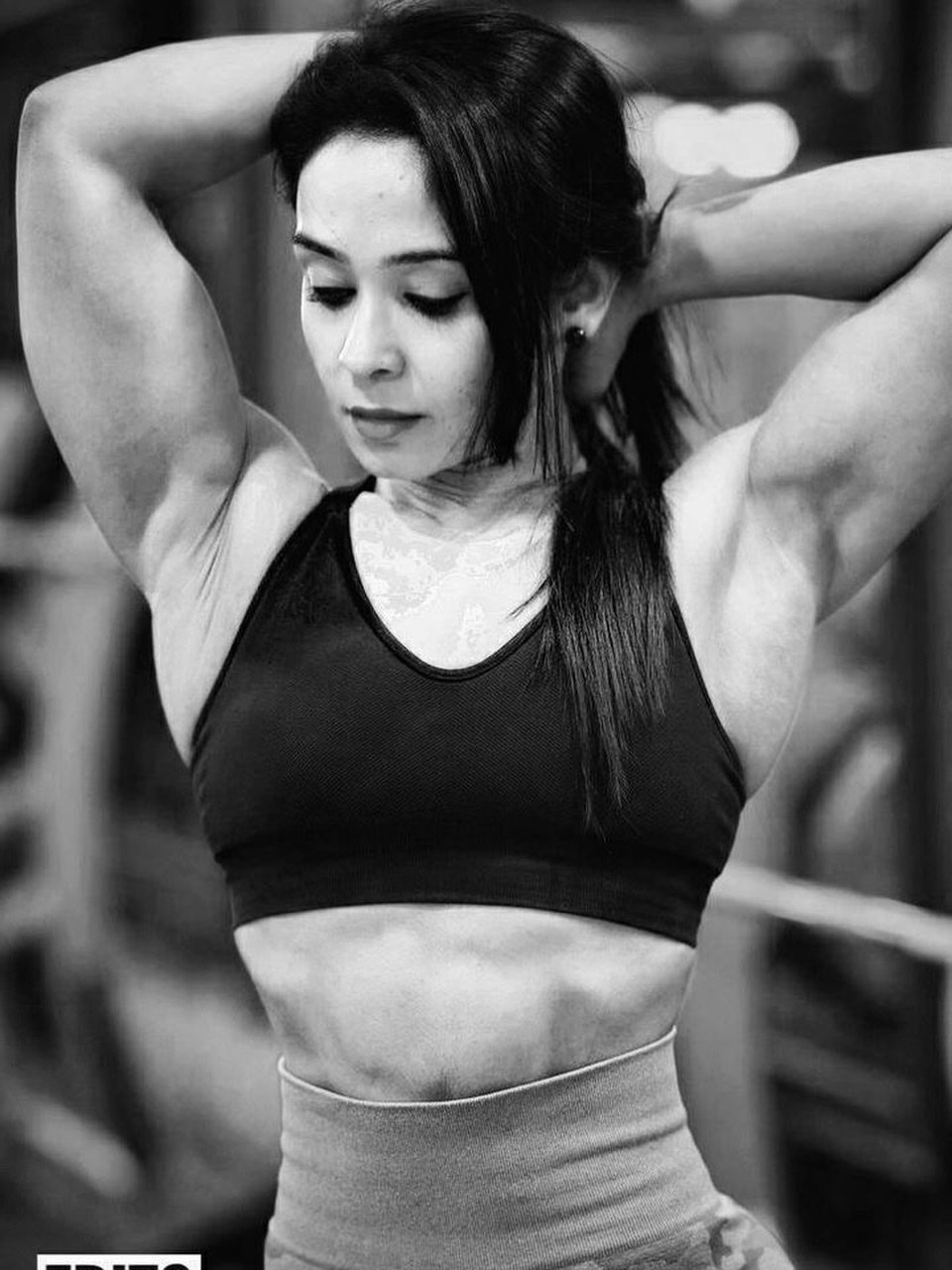
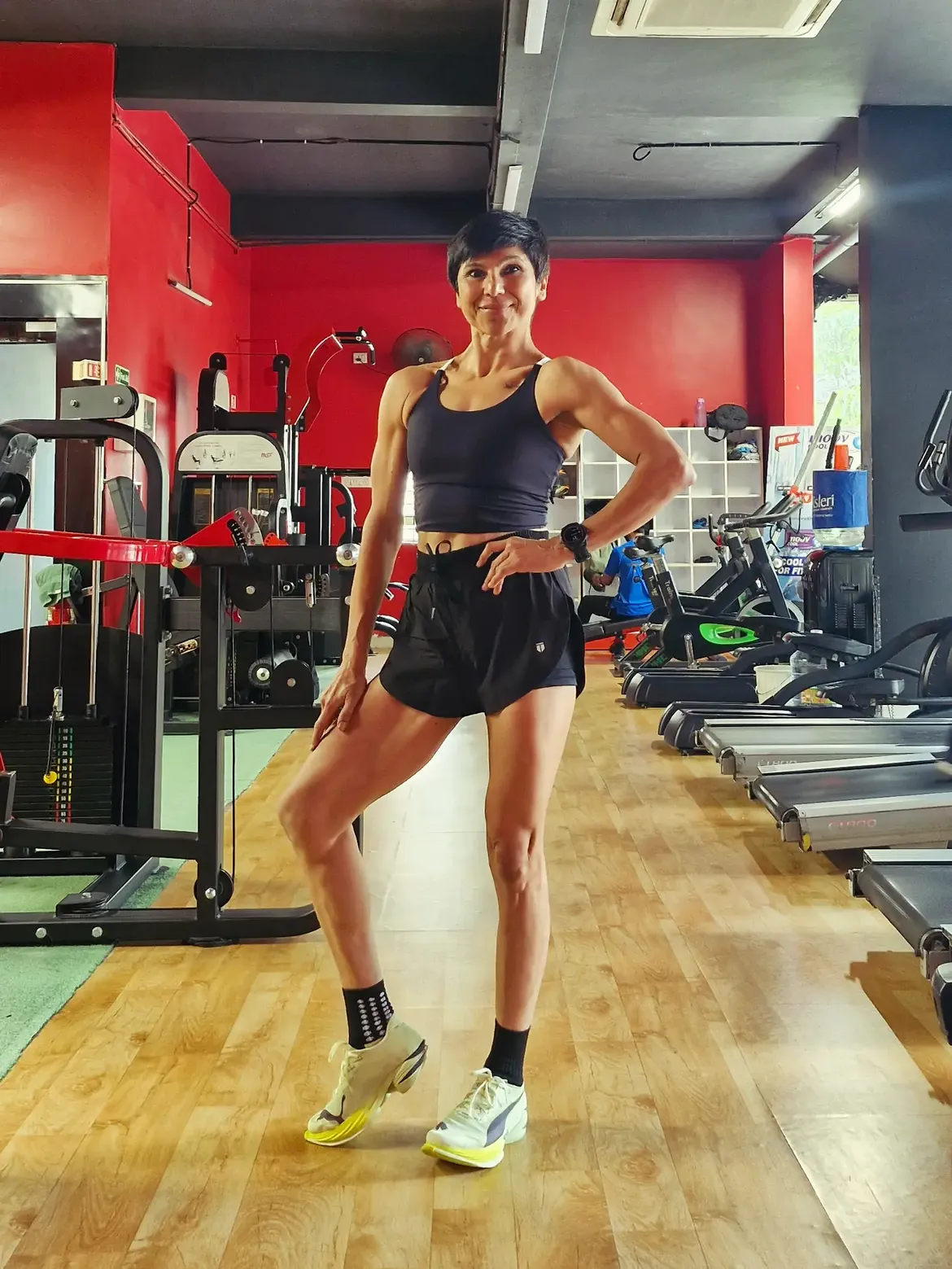
Rachna’s photograph captures the visible side of fitness: strength, confidence and physical conditioning.
But the story behind it reveals another kind of strength.
The quieter kind.
The ability to recognise exhaustion without automatically surrendering to it.
The ability to challenge yourself without ignoring yourself.
The ability to understand that rest and discipline are not opposites.
And perhaps most importantly, the ability to walk away from a workout with something more valuable than calories burned or kilometres completed:
pride in having listened, chosen and shown up.
Because ultimately, fitness is not about winning against your body.
It is about learning to work with it.
And every once in a while, that lesson is worth a photograph.
RACHNA CHAKRABORTY
The takeaway
Discipline isn’t always about pushing harder. Sometimes it is about knowing yourself well enough to decide whether today calls for effort—or recovery.
Photography: Rachna Chakraborty | Editorial feature