





Strong Shoulders, Stronger Self: Nidhi Mandal’s Philosophy of Women’s Fitness
By Nidhi Mandal
Strength is not simply something you see in the mirror. It is something you carry into every part of your life.
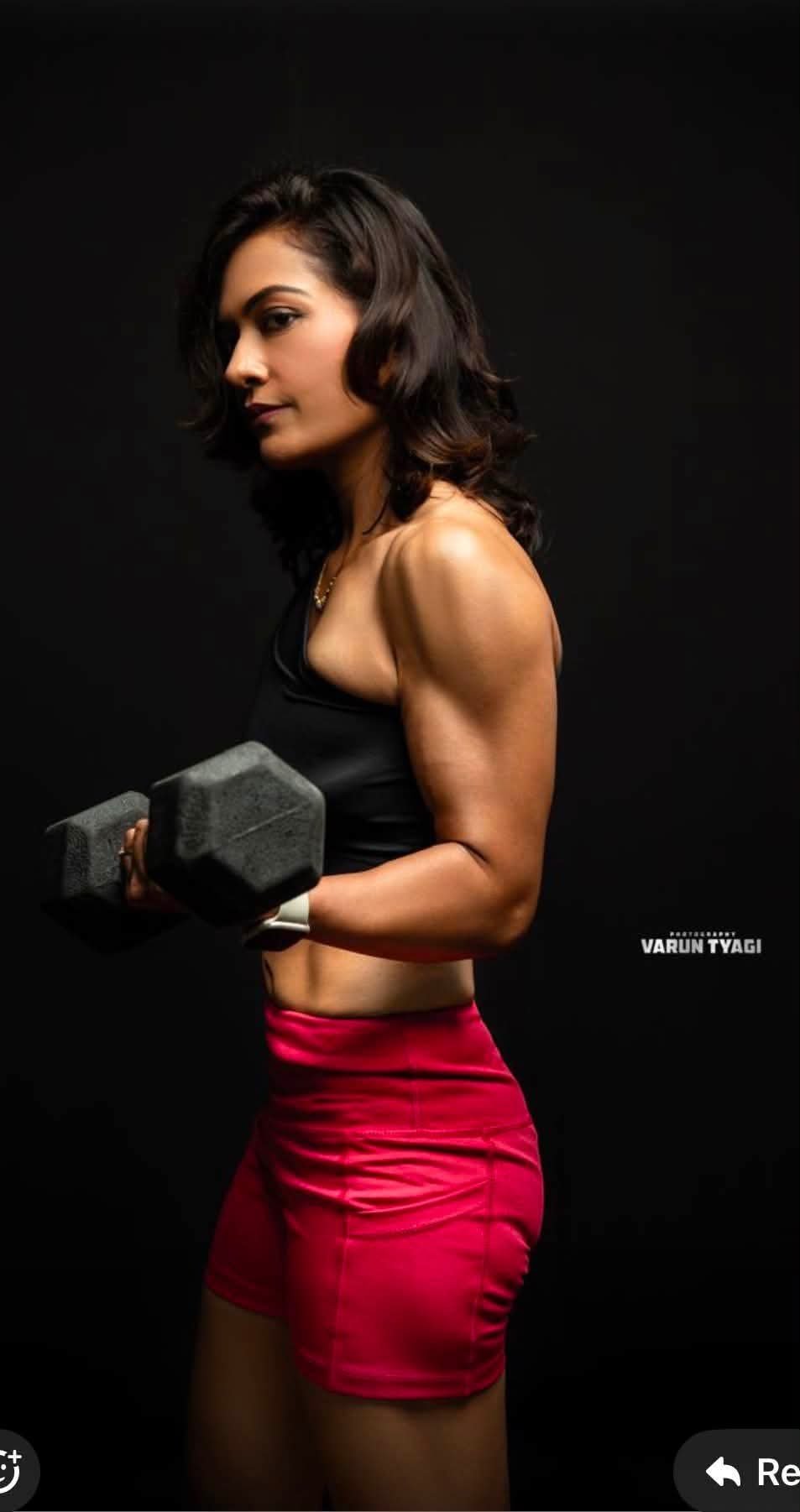
In a striking fitness portrait, Nidhi Mandal embodies a message that has become increasingly powerful in women’s fitness: strong is a look, but strength is a lifestyle.
Holding a dumbbell with composure and confidence, Mandal’s image captures more than an aesthetic moment. It reflects a training philosophy built around consistency, intelligent exercise selection and respect for the body’s ability to become stronger.
Her message is simple: STRONG SHOULDERS = STRONG YOU.
And behind those words lies a lesson that applies far beyond the gym.
The New Meaning of Strong
For years, conversations around women’s fitness were dominated by weight loss, calorie restriction and appearance.
Today, the conversation is changing.
Strength training is increasingly about building capable bodies—bodies that can lift, carry, press, pull, move and perform everyday tasks with confidence.
For Mandal, shoulder training represents exactly that philosophy.
Strong shoulders contribute to much more than a sculpted silhouette. They play an important role in movements ranging from pushing and pulling to lifting and carrying. Developing them can therefore be part of a broader approach to functional fitness.
Strength You Can Use
A strong body is not merely one that photographs well.
It is one that works well.
Whether it is carrying groceries, lifting luggage, performing household tasks, training in the gym or simply maintaining physical independence, strength has practical value.
That is why Mandal’s approach moves the conversation from “How do I look?” toward a more empowering question:
“What can my body do?”
Understanding the Three Heads of the Shoulder
One of the most important principles in Mandal’s message is simple but often overlooked: the shoulder is not one single muscle.
The deltoid has three primary portions:
1. Anterior Deltoid
The front deltoid contributes significantly to pressing movements and shoulder flexion. It is already involved in many chest and pressing exercises, which means it does not necessarily need endless additional isolation work.
2. Lateral Deltoid
The lateral, or middle, deltoid helps create shoulder width and contributes to the athletic “capped” appearance many people associate with developed shoulders.
3. Posterior Deltoid
The rear deltoid is frequently neglected because it is harder to see in the mirror. Yet balanced shoulder development requires attention to the posterior portion as well.
For Mandal, the lesson is clear: don’t train only what you can see from the front.
Balanced training matters.
Quality Over Ego
Perhaps the most important part of Mandal’s philosophy is not how much weight is being lifted, but how the weight is being lifted.
The temptation in strength training can be to chase heavier dumbbells simply because the number feels impressive.
But effective training is not a competition with the equipment.
Form Comes First
Controlled repetitions, appropriate range of motion and stable technique can make an exercise considerably more productive than simply moving heavier weight with compromised form.
Mandal advocates prioritising execution over ego lifting—a principle that can help beginners and experienced lifters alike.
The goal is not to impress the dumbbell. The goal is to train the muscle.
Progress Is Built Through Consistency
Another common mistake is constantly changing exercises in search of something new.
Fitness does not always need novelty.
Sometimes it needs repetition.
When an exercise is performed consistently, progress can be measured through factors such as repetitions, resistance, technique and control. That makes it easier to understand whether training is actually producing improvement.
Progressive Overload, Patiently Applied
Progressive overload does not mean lifting dramatically heavier every session.
It can mean gradually increasing resistance, performing more quality repetitions, improving technique or gaining better control over the movement.
Small improvements, repeated consistently, can create substantial change over time.
For Mandal, that consistency is more valuable than constantly chasing the next fitness trend.
You Don’t Need Twenty Shoulder Exercises
The modern fitness world can make training appear unnecessarily complicated.
Scroll through social media and it is easy to find endless exercise variations, elaborate routines and constantly changing programs.
But effective shoulder training does not require twenty exercises.
It requires the right movements, appropriate volume, good technique and consistent progression.
Mandal’s philosophy is refreshingly straightforward:
- Train all three deltoid regions.
- Prioritise technique over ego.
- Use controlled repetitions.
- Work through an appropriate range of motion.
- Progress gradually.
- Allow sufficient recovery.
- Support training with adequate nutrition and protein.
- Stay consistent.
The sophistication lies not in doing more, but in doing the fundamentals well.
Recovery Is Part of the Workout
Training provides the stimulus.
Recovery allows adaptation.
That means sleep, nutrition and rest days should not be treated as optional extras. They are part of the larger training process.
Protein, Sleep and Patience
Muscle development depends on more than resistance training alone. Adequate dietary protein, sufficient energy and quality sleep all contribute to recovery and adaptation.
For someone pursuing strength or muscle development, the lesson is particularly important:
You cannot out-train poor recovery indefinitely.
A sustainable fitness routine must make room for both effort and restoration.
A Stronger Image of Women’s Fitness
Mandal’s portrait also speaks to a broader cultural shift.
Women who lift are increasingly redefining what fitness looks like.
Strength does not take away femininity. Muscle does not diminish elegance. Athleticism does not require abandoning individuality.
Instead, strength can become another expression of confidence.
The image of a woman confidently holding a dumbbell is no longer simply a fitness photograph. It can represent independence, discipline and the willingness to invest in oneself.
Beyond the Mirror
There is nothing wrong with wanting defined shoulders or an athletic physique. Aesthetic goals can be motivating.
But they do not have to be the destination.
The deeper reward of strength training is what happens when physical capability begins influencing everyday confidence.
You stand a little taller.
You carry things more easily.
You feel more capable.
You become less intimidated by physical challenges.
And eventually, fitness becomes less about chasing an image and more about building a body you trust.
Strong Is a Long-Term Commitment
Mandal’s message is ultimately not about one workout or one photograph.
It is about consistency.
There will be days when motivation is high and days when it is not. There will be sessions that feel powerful and others that simply need to be completed.
The transformation comes from continuing anyway.
The Nidhi Mandal Approach
Nidhi Mandal’s fitness philosophy can be distilled into a few powerful principles:
Train intelligently.
Lift with purpose.
Respect technique.
Progress patiently.
Recover completely.
Stay consistent.
The result is not simply stronger shoulders.
It is a stronger relationship with your body.
And perhaps that is the most meaningful definition of fitness: not becoming someone else, but becoming stronger, more capable and more confident in who you already are.
Final Word
A pair of strong shoulders can certainly create an athletic silhouette.
But their real value goes deeper.
They help us press, pull, lift and carry. They represent physical capability. They remind us that strength is developed through deliberate effort, not overnight transformation.
In her powerful fitness image, Nidhi Mandal offers a message worth carrying beyond the gym:
Strong shoulders can build a strong body—but consistency builds a stronger you.
#ShoulderWorkout #StrongWomen #WomenWhoLift #fittrcoach

