




Sophie Adenot Makes History as the First French Woman to Walk in Space
Technology | Space Exploration | International Space Station
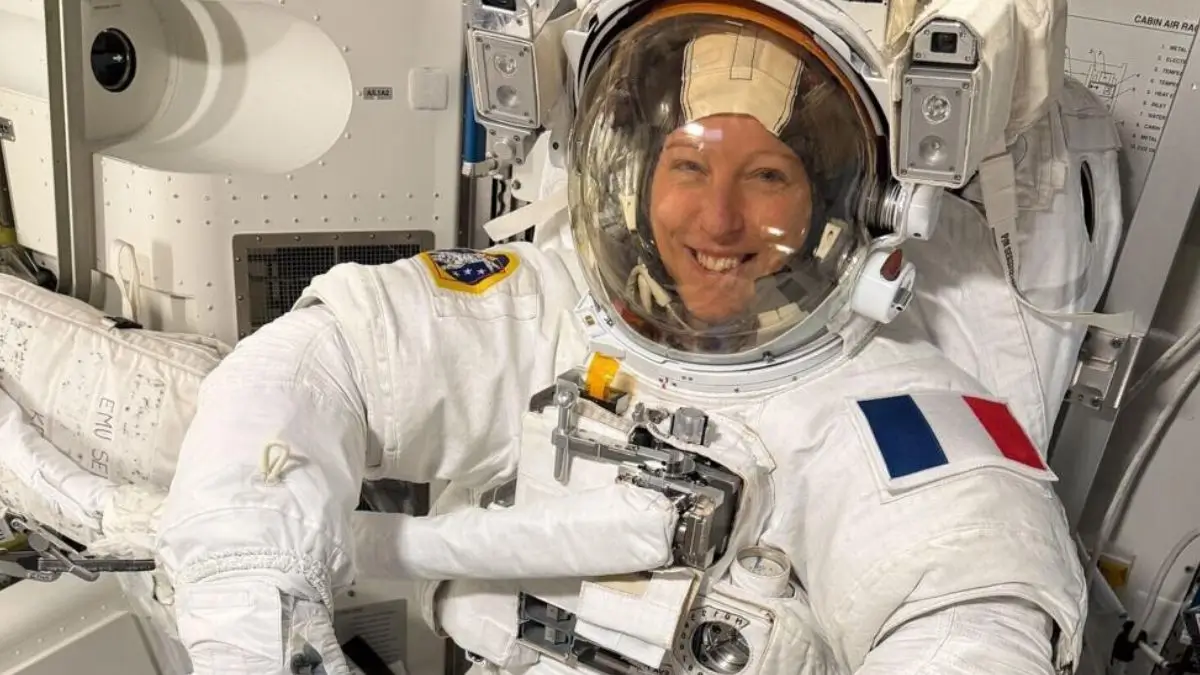
On August 18, 2026, European Space Agency (ESA) astronaut Sophie Adenot made history by becoming the first French woman to perform a spacewalk. Her first extravehicular activity (EVA), carried out alongside NASA astronaut Anil Menon, was not just a landmark moment for France but also a technically demanding maintenance operation aboard the International Space Station (ISS). (esa.int, nasa.gov)
The six-hour-and-23-minute spacewalk, officially designated U.S. Spacewalk 97 (EVA-97), focused on work involving a failed Space-to-Ground Antenna (SGANT) mounted on the ISS. The mission demonstrated how modern space exploration increasingly depends on sophisticated communication systems, robotic technology, precision engineering and close cooperation between astronauts and teams on Earth.
A Historic First for Sophie Adenot
Adenot’s achievement represents an important milestone in European human spaceflight. She became the first French woman to venture outside a spacecraft for a spacewalk and the second European woman to conduct an EVA, following Italian astronaut Samantha Cristoforetti’s historic spacewalk in 2022. (euronews.com)
Her journey to the ISS has been built on an extensive engineering and aviation background. Born in France in 1982, Adenot studied engineering at ISAE-SUPAERO, specialising in aircraft and spacecraft flight dynamics, and later earned a master’s degree in human factors engineering from MIT. She subsequently became a helicopter pilot and, in 2018, graduated as a helicopter test pilot. ESA selected her as an astronaut candidate in 2022, and she completed her basic astronaut training in 2024. (esa.int)
She launched to the ISS on February 13, 2026, as part of ESA’s εpsilon mission, planned as a nine-month mission aboard the orbital laboratory. (esa.int)
What Was the EVA-97 Mission?
The primary objective of EVA-97 was to remove a failed Space-to-Ground Antenna 2 (SGANT-2) and prepare the station for installation of a replacement unit.
The antenna is an important part of the ISS communication infrastructure. It supports high-data-rate communications and helps transmit information between the space station, NASA’s Tracking and Data Relay Satellite system and mission control facilities on Earth. SGANT-2 had been unable to track the relevant satellite constellation since November 2025. (esa.int, nasa.gov)
Although communication remained available through another functioning antenna, restoring redundancy was important for the station’s long-term communication capability.
The Technology Behind Space-to-Ground Communication
Spacecraft cannot simply communicate directly with ground stations at every moment because the ISS is continuously moving around Earth.
Systems such as the Space-to-Ground Antenna help establish reliable communication links between the orbital station and NASA’s communications infrastructure. These links are essential for transmitting scientific data, operational information, voice communications and other information between astronauts and teams on Earth.
That makes an antenna replacement on the ISS much more than a simple hardware repair. It involves mechanical components, electrical connections, robotic assistance, spacesuit operations and precise coordination between astronauts and Mission Control.
When Space Hardware Doesn’t Go According to Plan
The EVA also provided an example of one of the biggest realities of space engineering: even carefully planned operations can encounter unexpected problems.
During the repair, Adenot and Menon encountered stuck bolts and connectors while disconnecting the failed antenna. The additional work consumed valuable time, preventing the astronauts from completing the planned installation of the replacement antenna during the same spacewalk. (esa.int, nasa.gov)
Mission Control therefore modified the plan. Instead of continuing to force the original sequence, the astronauts securely tied down the failed antenna to the station’s truss structure and prepared the worksite for a future EVA.
This is a good example of engineering decision-making in an extreme environment: safety and controlled execution take priority over completing every planned task within a single outing.
Canadarm2: The Robotic Technology Supporting Astronauts
Another important piece of technology involved in the operation was Canadarm2, the ISS’s large robotic manipulator.
The robotic arm can move equipment and astronauts around the exterior of the station, reducing the physical difficulty of working across different sections of the orbital laboratory.
During the operation, NASA astronaut Jack Hathaway operated Canadarm2 from inside the ISS, while Jessica Meir and other crew members supported the spacewalkers. This meant the operation involved not just the two astronauts outside the station but an entire team working together inside the ISS and on the ground. (esa.int)
What Is an Extravehicular Activity?
An Extravehicular Activity (EVA), commonly called a spacewalk, is an operation in which an astronaut works outside a spacecraft or space station while wearing a specialised spacesuit.
A spacewalk can involve:
- Repairing damaged equipment
- Installing new hardware
- Replacing scientific instruments
- Maintaining spacecraft systems
- Upgrading station infrastructure
- Inspecting external components
- Supporting future space missions
A spacesuit essentially functions as a small personal spacecraft. It provides the astronaut with life support, temperature regulation, communications and protection from the vacuum and extreme environment of space.
A Spacewalk Is a Team Achievement
Although Sophie Adenot and Anil Menon were the astronauts visible outside the ISS, the operation depended on a much larger team.
Astronauts inside the station helped prepare the spacewalkers and operated the robotic equipment. Mission controllers on Earth continuously monitored the operation and adjusted procedures when the antenna work encountered difficulties.
ESA itself emphasises that spacewalks require extensive preparation well before an astronaut exits the airlock. Adenot’s background in engineering, aviation and test flying also reflects the kind of technical expertise required for such missions. (esa.int)
The Mission Isn’t Over Yet
The incomplete antenna installation was not considered a failure of the mission. The astronauts successfully removed the failed antenna and secured it, while the remaining installation work was deferred.
According to ESA, a second spacewalk was planned for August 25, 2026, during which Adenot and Menon are expected to continue work on the SGANT system and install the spare antenna. (esa.int)
This follow-up operation illustrates another important principle of spaceflight: complex maintenance activities can be divided across multiple EVAs when circumstances require a different approach.
Why Sophie Adenot’s Spacewalk Matters
Sophie Adenot’s historic EVA carries significance beyond the record itself.
It represents the growing participation of European astronauts in increasingly complex space operations. It also demonstrates how modern space exploration brings together engineering, robotics, communications technology, human factors and international cooperation.
For France, it is a landmark moment. For Europe, it is another step in expanding its role in human spaceflight. And for the technology community, the mission offers a fascinating look at how astronauts maintain an increasingly sophisticated laboratory hundreds of kilometres above Earth.
Conclusion
Sophie Adenot’s first spacewalk combined a historic achievement with a challenging piece of orbital engineering.
On August 18, she became the first French woman to conduct a spacewalk, while working alongside Anil Menon to remove a failed communication antenna from the International Space Station. The six-hour-and-23-minute EVA demonstrated both the capabilities of modern space technology and the importance of adaptability when complex hardware presents unexpected challenges. (esa.int, nasa.gov)
The story is ultimately about more than one astronaut stepping outside the ISS. It is about people, machines and technology working together in one of the most demanding environments humans have ever entered.
For JaanoAndSeekho.in’s Technology section, Adenot’s achievement is a reminder that the future of space exploration will depend not only on reaching space, but also on our ability to maintain, repair and continuously upgrade the technology that allows humans to live and work there.