





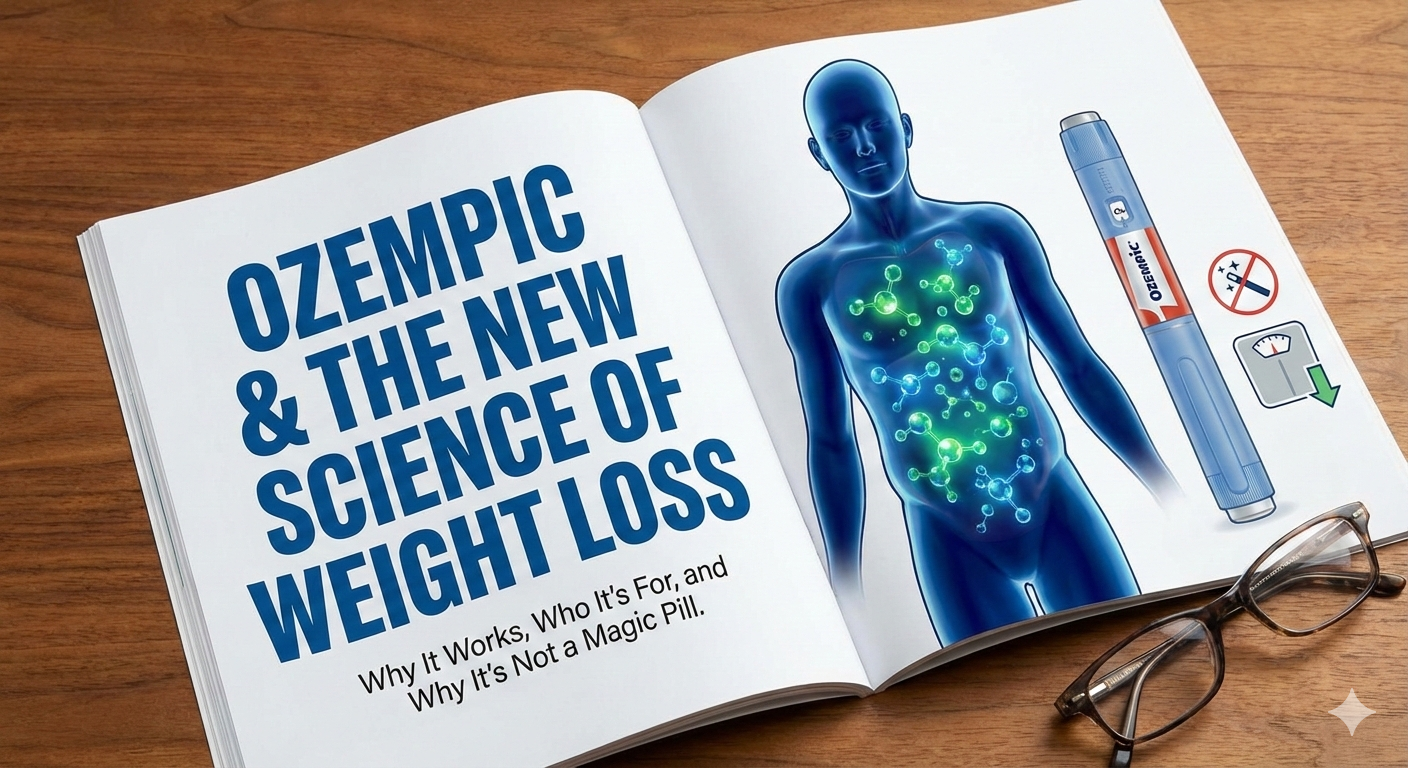
Ozempic and the New Science of Weight Loss: Why It Works, Who It’s For, and Why It’s Not a Magic Pill
By Dr. Kashmi Sharma
In the modern fight against obesity and metabolic disease, few medications have sparked as much global attention as Ozempic (semaglutide). Once quietly prescribed for Type 2 diabetes, it has now become a symbol of a broader shift in how medicine understands weight regulation—not as a failure of willpower, but as a biological and hormonal challenge.
Yet amid viral reels, celebrity chatter, and cosmetic weight-loss trends, a critical truth often gets lost: Ozempic is not designed for everyone, and it is not a shortcut. Used correctly, it can be transformative. Used casually, it can be misleading—and sometimes harmful.
This is the science behind Ozempic, explained clearly and responsibly.
What Is Ozempic—and Why Is It Different?
Ozempic contains semaglutide, a GLP-1 receptor agonist. GLP-1 (glucagon-like peptide-1) is a naturally occurring hormone that plays a central role in:
- Regulating blood sugar
- Slowing gastric emptying
- Reducing appetite and cravings
- Improving insulin sensitivity
In people with Type 2 diabetes and obesity, GLP-1 signaling is often impaired. Semaglutide works by mimicking this hormone, helping the brain and gut communicate more effectively about hunger and satiety.
Clinical trials consistently show:
- Significant A1C reduction
- 5–15% sustained body-weight loss
- Improved cardiometabolic markers when combined with lifestyle intervention
This is not cosmetic fat loss. It is metabolic recalibration.
Who Ozempic Was Actually Made For
Despite popular misuse, Ozempic was developed for specific, high-risk populations.
1. Type 2 Diabetes Patients
Especially those who:
- Struggle with glycemic control despite oral medications
- Have insulin resistance and central obesity
- Require cardioprotective metabolic support
Semaglutide has demonstrated superior glucose control and weight reduction compared to many traditional therapies.
2. Adults with Obesity or Overweight with Comorbidities
Clinically defined as:
- BMI ≥30, or
- BMI ≥27 with conditions such as hypertension, prediabetes, dyslipidemia, or PCOS
For these individuals, even 5–10% weight loss can dramatically reduce disease risk—and Ozempic helps make that physiologically achievable.
3. Those Who Failed Lifestyle Interventions Alone
Contrary to stigma, many patients follow diet and exercise plans diligently yet fail to lose weight due to hormonal resistance. For them, Ozempic acts as a medical adjunct, not a replacement.
Who Should Not Be Using Ozempic
Equally important is knowing who Ozempic is not for.
Healthy-Weight Individuals Seeking Quick Fat Loss
Using a potent metabolic drug for cosmetic reasons:
- Exposes users to unnecessary risks
- Disrupts natural hunger signaling
- Reinforces unsustainable weight-loss behavior
The risk-benefit ratio does not justify use in this group.
People with Medical Contraindications
Ozempic is not recommended for:
- Type 1 diabetes
- History of pancreatitis
- Personal or family history of medullary thyroid cancer
- Severe gastrointestinal disorders
Medical screening is non-negotiable.
Anyone Avoiding Lifestyle Change
Research shows that nearly two-thirds of users regain weight after stopping semaglutide if diet, strength training, and stress management are not addressed.
Ozempic does not replace habits. It amplifies them—or exposes their absence.
Why Ozempic Alone Is Not Enough
Semaglutide reduces appetite—but it does not build muscle, improve bone density, or correct micronutrient deficiencies.
For sustainable results, it must be paired with:
Protein-Rich Nutrition
To prevent muscle loss and support metabolic rate.
Strength Training
Critical for preserving lean mass and preventing metabolic slowdown.
Stress & Sleep Regulation
Chronic cortisol elevation directly counteracts fat loss—even with medication.
Without these foundations, weight loss becomes temporary, fragile, and reversible.
The Bigger Picture: Prevention Over Prescription
Ozempic represents a powerful evolution in metabolic medicine—but it is not a population-wide solution. The real victory lies in early prevention, informed lifestyle choices, and ethical medical guidance.
Used appropriately, Ozempic can restore health and dignity to those long blamed for biological conditions beyond their control. Used irresponsibly, it risks becoming another misunderstood trend.
The question is not “Does Ozempic work?”
The real question is “Are we using it wisely?”
Final Word from Dr. Kashmi Sharma
True weight management is not about chasing thinness—it is about restoring metabolic health. Medication can assist, but discipline, nutrition, movement, and mindset remain irreplaceable.
Always consult a qualified healthcare professional.
Because in medicine—as in life—prevention will always matter more than prescription.
SEO Keywords Integrated
Ozempic, semaglutide, weight loss injection, appetite control, insulin resistance, craving management, fat loss support, sustainable weight loss, metabolic health, obesity treatment, Type 2 diabetes management, GLP-1 agonist.

